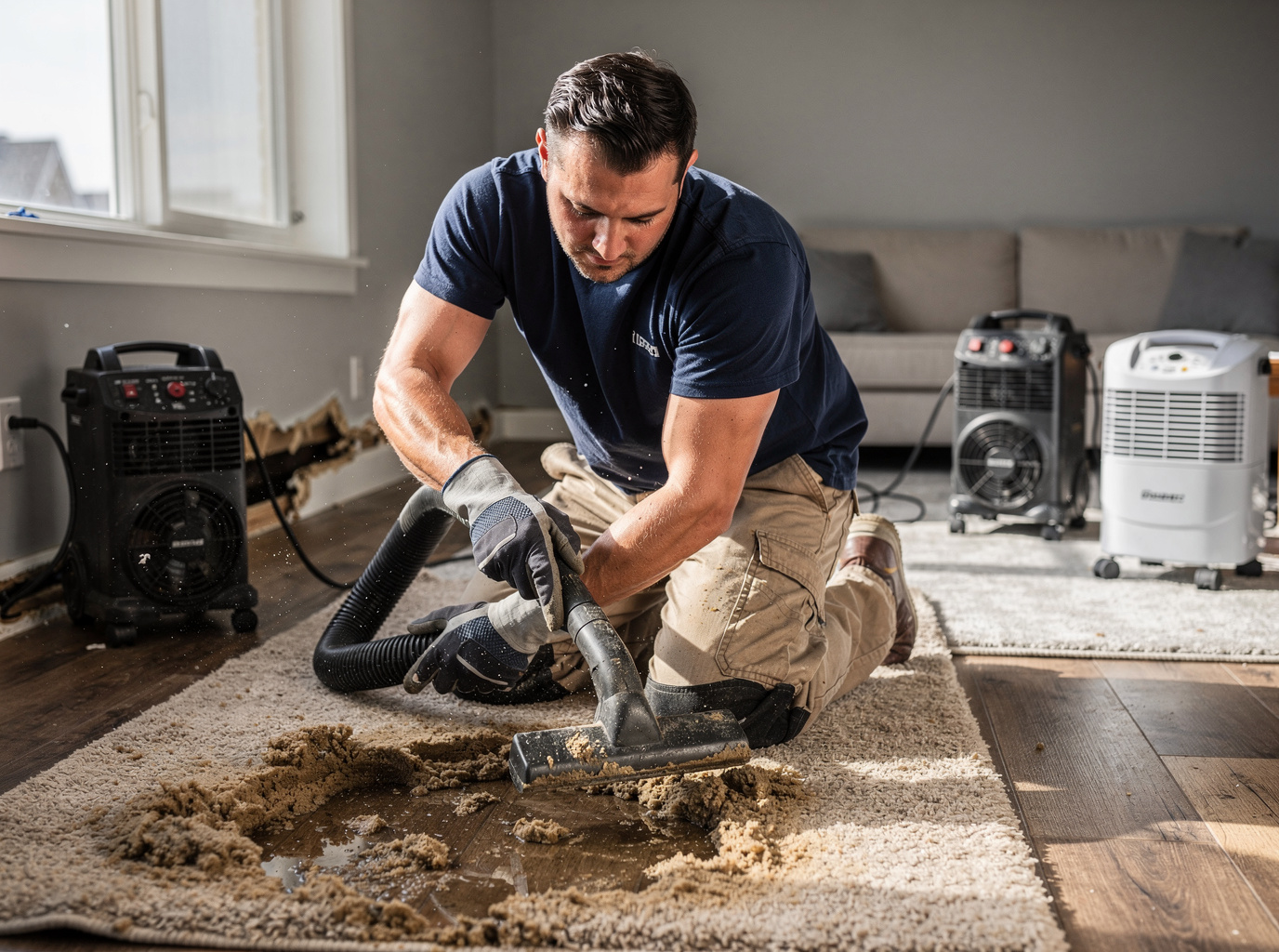
Glenbrook sits in south Reno with homes built from the 1970s onward on larger lots that back up to drainage channels feeding toward the Truckee River. Cold winter nights often freeze supply lines in crawl spaces and garages while summer thunderstorms send water across packed high-desert soil and into lower-level rooms. Reno Water Damage Restoration pros at 14830 Kivett Ln runs crews straight up 395 to Glenbrook Drive and the surrounding streets, bringing extraction equipment sized for the bigger square footage common here.
Access matters on these properties. Many driveways sit on slopes that collect runoff, and narrow side yards limit where we can park dehumidifiers and air movers. We stage gear at the street and run hoses through side gates rather than tearing up landscaping. Same-day moisture mapping with thermal cameras shows exactly how far water traveled under slab-on-grade floors before it reaches neighboring homes in the same cul-de-sac.
Winter pipe bursts and ice dams on older roofs are the two biggest calls we answer in Glenbrook. We keep extra pumps on the trucks because the ground stays frozen longer at this elevation, slowing natural drying. After we pull the water we leave the right number of drying units so homeowners can keep their schedules without equipment blocking hallways for weeks.
Around Glenbrook
We regularly work near:
- 📍Glenbrook Drive
- 📍Lake Tahoe
- 📍Truckee River
- 📍Spooner Lake
Water Damage Restoration in Glenbrook — Local Notes
- •Sloped lots along Glenbrook Drive and nearby cul-de-sacs funnel runoff directly into garages and lower-level family rooms during cloudbursts.
- •Many homes here have crawl spaces with low clearance; we use compact pumps and lay flat hoses to reach standing water without enlarging access points.
- •Winter temperatures drop fast enough that pipe bursts often occur at night; our on-call crew from Kivett Lane reaches Glenbrook within 45 minutes even after dark.
- •High desert air dries surface moisture quickly but leaves hidden moisture under tile and in wall cavities, requiring longer drying cycles than coastal jobs.